

The Quiet Language of Comfort: Mastering Sympathy Flower Etiquette
When someone experiences the profound loss of a loved one, the immediate response is often a deep desire to help and offer comfort. Yet, finding the right words—or the right actions—can feel impossible. In these moments of silence and sorrow, flowers transcend language, acting as a tangible, living expression of empathy and respect. Sending sympathy flowers is a time-honored tradition, but the process is fraught with sensitive decisions: What type of flower is appropriate? Should they go to the funeral home or the family’s residence? What should the card say?
This comprehensive guide, written by an SEO expert and professional copywriter, will walk you through every critical step of sending sympathy flowers. We aim to equip you with the knowledge needed to ensure your thoughtful gesture provides genuine solace, following established etiquette and respecting cultural nuances, particularly during a time when simple gestures carry immense weight.
Understanding Timing and Destination: When and Where to Send Your Arrangement
The first crucial decision involves logistics: determining the appropriate timing and location for delivery. Getting this wrong can lead to unnecessary stress for the grieving family.
Immediate Support vs. Sustained Comfort
There are generally two key windows for sending floral tributes, and each serves a different purpose:
- The Service/Funeral Home: These are generally large, formal arrangements sent immediately upon hearing the news, intended for display during the viewing, wake, or funeral service. They serve as a public tribute to the deceased.
- The Family Home (Sympathy Flowers): These are often smaller, less formal arrangements or plants intended to bring comfort directly to the immediate family during their period of mourning, either before the service or weeks afterward.
The Golden Rule of Timing
Ideally, flowers intended for the funeral service should arrive at the funeral home at least 2 to 3 hours before the first viewing or calling hours. If the services are private, or if the family requests ‘in lieu of flowers’ donations, arrangements should be sent to the home instead.
Home vs. Service: Delivery Guidelines
The choice of destination dictates the size and formality of the arrangement.
Sending to the Funeral Home or Place of Worship
These venues require large, impressive pieces that stand up well in a large space. Ensure you include the full name of the deceased, the time of the service, and the name of the funeral director if possible, to aid the delivery process.
Sending to the Family’s Residence
For the home, focus on arrangements that are easy to care for and manage. Large standing sprays or wreaths are inappropriate. Consider:
- Potted plants (orchids, peace lilies) that last long after the service.
- Smaller table arrangements that don’t require daily maintenance.
- Gourmet baskets or fruit, often alongside a small floral accent, are also very appropriate for home delivery.
The Etiquette of Arrangement Selection: Choosing Appropriate Blooms
While almost all flowers are beautiful, certain types and colors have historically carried specific meanings in the context of mourning and loss. Understanding these traditions helps you select an arrangement that speaks volumes.
Symbolic Meanings of Sympathy Flowers
When selecting blooms, consider their traditional associations:
- Lilies: Perhaps the most classic sympathy flower, the white lily symbolizes restored innocence and purity of the soul.
- Roses: White roses signify reverence, innocence, and humility. Dark crimson roses denote grief and sorrow. Yellow roses are often given by friends to symbolize strong ties.
- Carnations: White carnations symbolize pure love and innocence; pink suggests remembrance.
- Gladioli: Representing strength of character, sincerity, and moral integrity.
- Peace Lily (Spathiphyllum): A popular potted plant choice, symbolizing peace, rebirth, and healing. It is a long-lasting gift.
Formal Funeral Arrangements (For the Service)
These pieces are typically ordered by immediate family, close friends, or large organizations.
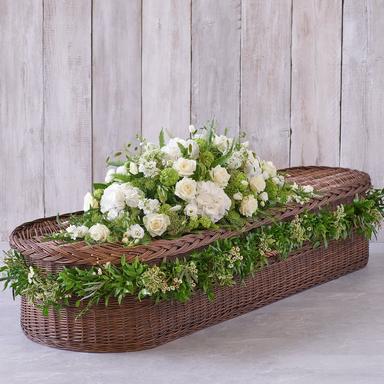
- Casket Sprays: The arrangement placed directly on top of the casket. This is traditionally reserved for the immediate family (spouse, children).
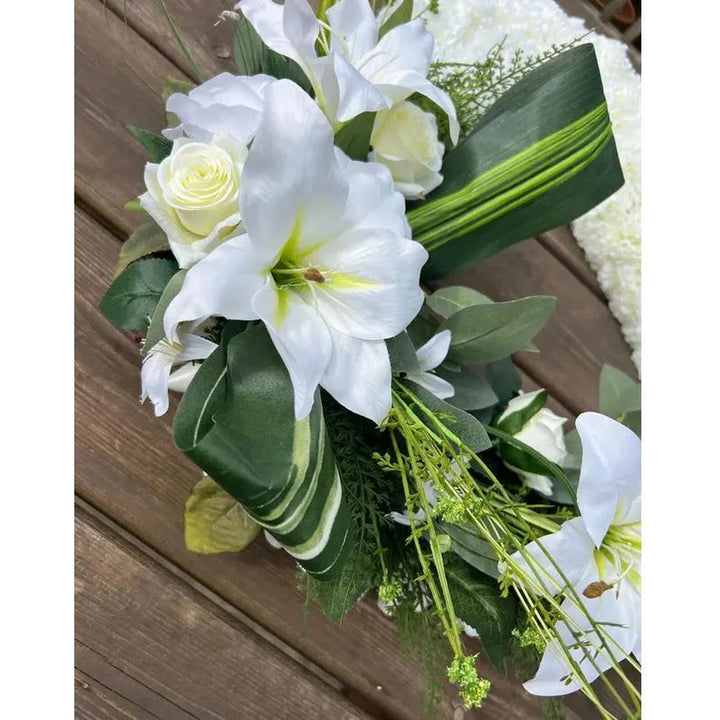
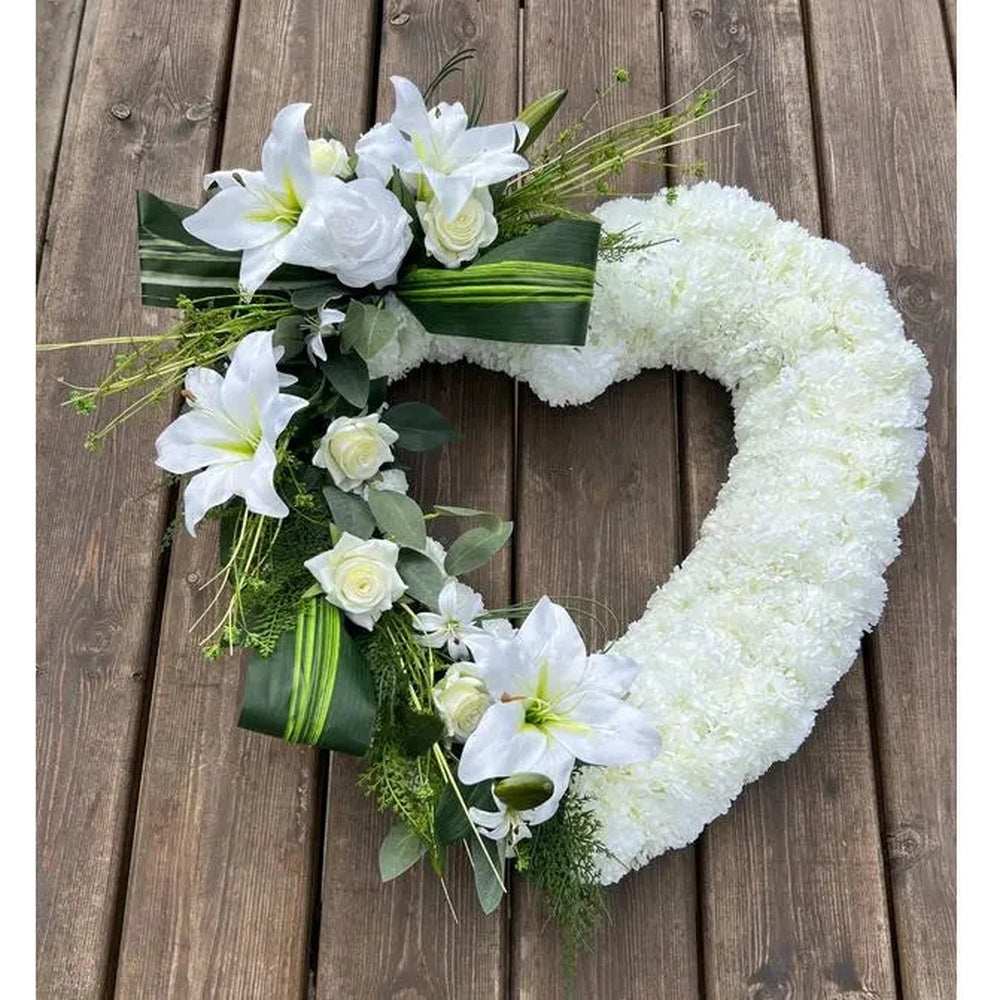
- Wreaths and Crosses: Circular (wreaths) and cross-shaped arrangements symbolizing eternity and religious faith, respectively.
- Standing Sprays: Tall arrangements placed on easels near the casket or altar, often ordered by extended family or large groups of mourners.
Informal Arrangements (For the Home or Office)
If you are a colleague, acquaintance, or simply wish to send a less imposing tribute, smaller, more personal arrangements are best.
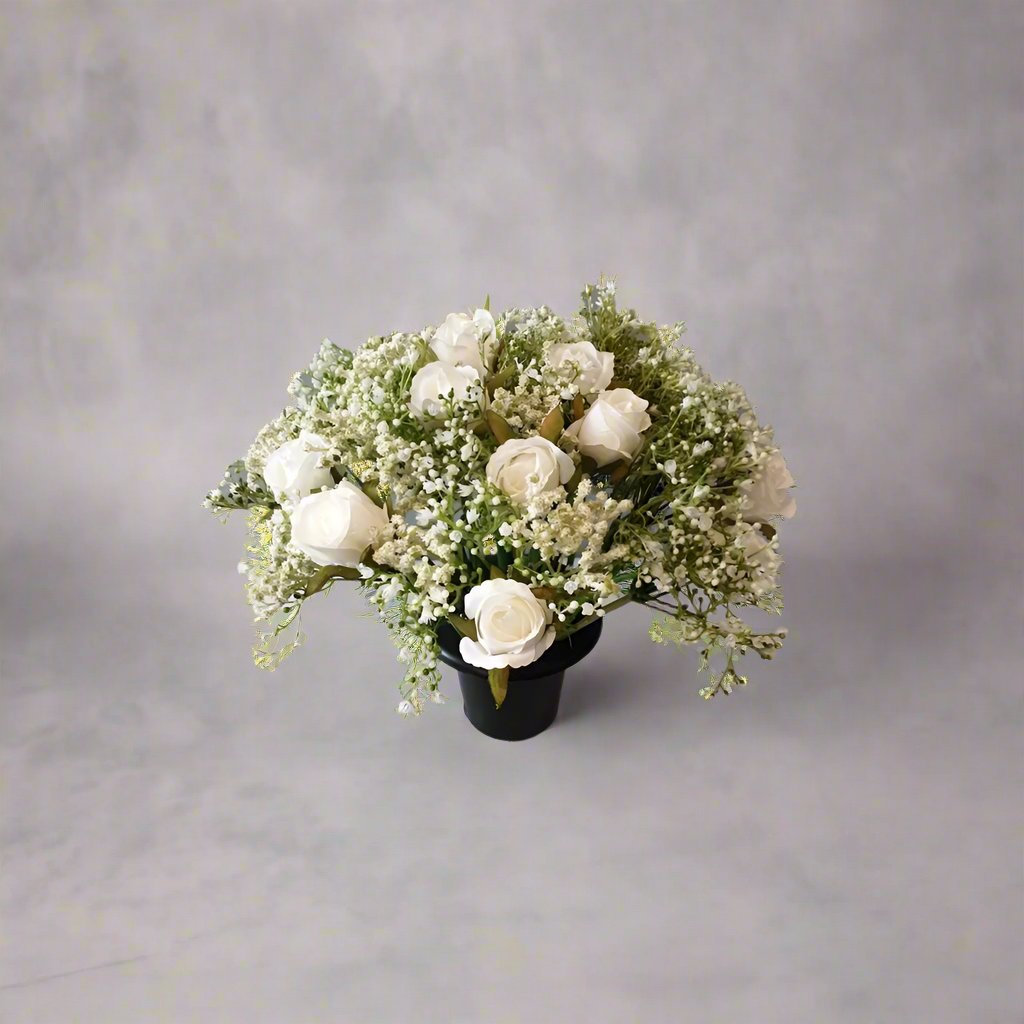
Tip: If the deceased was cremated, smaller, personalized urn arrangements are often displayed, which can be ordered by anyone close to the deceased.
Addressing Religious and Cultural Sensitivities
Sensitivity to the family’s religious or cultural background is paramount. What is appropriate in one setting may be offensive in another.
Key Religious Considerations
- Jewish Tradition: Flowers are generally discouraged in traditional Jewish mourning (Shiva). Instead, it is customary to send food (a Shiva basket) to the home, or to make a donation to a meaningful charity in the deceased’s name.
- Islamic Tradition: While opinions vary, large, ostentatious floral arrangements are often avoided. Sending a simple green plant or making a charitable donation is often preferred.
- Mormon (LDS) Tradition: Flowers are almost always welcomed at the funeral home and service. Avoid arrangements shaped like a cross, though, as these are not customary.
- Buddhist Tradition: White flowers are generally appropriate, symbolizing purity. Red flowers are typically avoided, as they can sometimes be associated with celebration.
When in doubt, always consult the obituary or contact the funeral home directly. Often, the family will specify preferences, such as ‘In lieu of flowers, donations may be made to…’
Beyond the Blooms: Crafting the Perfect Sympathy Message
The card that accompanies the flowers is often read and reread by the grieving family. It needs to be genuine, respectful, and brief.
What to Write: Key Components of a Sympathy Card
A sympathy message does not need to be long; sincerity is more important than length. Aim for 3–4 sentences maximum.
1. Acknowledgment of Loss and Expression of Sympathy
Start simply and directly. Example: “I was so saddened to hear about the passing of [Name].”
2. A Positive Memory or Compliment (Optional, but impactful)
If you knew the deceased well, include a specific memory or comment on their best qualities. Example: “I will always remember [Name]’s incredible laugh and generosity.”
3. Offering Support
A concise offer of help or reassurance. Example: “Please know I am thinking of your family during this difficult time. We are here if you need anything at all.”
4. Closing and Signature
Use a warm closing. Example: “With Deepest Sympathy,” or “Thinking of you,” followed by your name(s).
Example Messages Based on Relationship
- For Close Friends/Immediate Family: “Words cannot express my sorrow. [Name] brought so much light to everyone around them. We are sending all our love and strength to you and your family.”
- For Colleagues/Acquaintances: “Please accept our deepest condolences on your loss. [Name] was a respected member of our team and will be truly missed. Our thoughts are with you.”
- For the Loss of a Child or Young Person: “Our hearts are aching for you. We pray you find some comfort knowing that [Name] was deeply loved by everyone who met them. Sending healing thoughts.”
Practical Logistics: Delivery, Cost, and Common Mistakes
Once you’ve decided on the arrangement, the practicalities of ordering must be handled efficiently.
Choosing Your Florist Wisely
While online mass retailers are convenient, for funeral flowers, it is always best to choose a reputable local florist who is geographically close to the funeral home.
- Local florists are familiar with the funeral home’s delivery schedule, preferred entrance points, and staff.
- They understand local customs and can guarantee timely delivery with minimal risk of damage.
- They can often better accommodate last-minute requests or necessary substitutions.
Budgeting for Sympathy Flowers
The cost varies greatly based on the arrangement type. A small arrangement for the home might cost $50–$75, while a standing spray for the service often ranges from $150 to $500+. It is entirely acceptable, especially if you are a distant acquaintance, to pool resources with a group (e.g., coworkers) to purchase a larger, single tribute.
Common Mistakes to Avoid When Sending Sympathy Flowers
To ensure your gesture is one of comfort, avoid these pitfalls:
- Sending Highly Fragrant Blooms: Avoid extremely powerful scents like certain gardenias or strong lilies, as they can trigger allergies or headaches, particularly in crowded, warm funeral home settings.
- Ignoring the Family’s Request: If the obituary specifically requests ‘in lieu of flowers,’ respect that wish and make a charitable donation instead.
- Attaching a Business Card Instead of a Sympathy Card: Always use a proper card with a heartfelt message. Professional business cards look cold and transactional.
- Delaying Delivery: Do not send flowers after the burial unless they are specifically intended as a continuing tribute sent weeks later to the family home.
- Choosing an Unsuitable Container: Avoid cheap plastic or novelty containers. Choose classic, tasteful ceramic, glass, or woven baskets.
The Power of Sustained Support
Remember that the initial influx of support often fades quickly. If you want to make a truly impactful gesture, consider sending a small plant or arrangement several weeks or even months after the service. This unexpected reminder that you are still thinking of them, long after the crowds have gone, can be incredibly meaningful.
Beyond Flowers: Practical Alternatives
Sometimes, the family genuinely doesn’t want flowers. Consider practical alternatives that still convey your care:
- A donation to a charity important to the deceased.
- A gift certificate for a meal delivery service.
- A framed photograph of the deceased (if appropriate).
- A beautifully bound memorial book for guests to sign.
Conclusion: A Heartfelt Expression When Words Fail
Sending sympathy flowers is a deeply personal and meaningful act of kindness during a time of profound sorrow. By adhering to proper etiquette regarding timing, selection, and location, you ensure that your tribute serves its intended purpose: to offer comfort, honor the memory of the deceased, and provide a visual representation of the community’s support.
While the logistics may seem complex, remember that the most important element is your intention. Whether a grand standing spray at the service or a small, humble plant delivered to the home, your genuine expression of sympathy is a powerful balm to a grieving heart. Send your flowers with confidence, knowing that you have navigated this sensitive process with respect and care.
Best Selling
Extra Large Rose & Iris Bouquet
Neutral
Autumnal shades
Reds and pinks
Citrus shades
Pinks and creams
Pretty pastels
Bright and cheerful
Seasonal flowers
Woodland Cushion
With Love Greetings Card
Wild Flowers
White Tulips with Eucalytus Bouquet
White oriental Lily arrangements
White Natural Pillow
thomas kinkade christmas
thomas kinkade christmas
Based on 863 reviews
863 Reviews
Gorgeous bunch
I ordered these flowers for a family member and it turned out so beautiful, flowers were gorgeous and fresh! Highly recommend
5 Star service
“Fantastic same-day flower delivery! The flowers arrived on time, fresh, and beautifully arranged. My girl absolutely loved them — highly recommend!”
Peaches and Cream Flower Box
Flowers were delivered on time with an accompanying photo. Beautifully presented and much appreciated by the recipients. Will definitely order from this business again.
Beautiful Flowers!!
Beautiful Flowers, exactly as online photos. Delivery was on time to hospital requested and wonderful.
Flowers sent for a family as they had lost their loved one.
Good delivery and product. The family were happy. Only complaint I have is that the whole written material with our senders names was not printed on the card. The family receiving the flowers did not know who is it from. Best to ensure that's done. Thank u
Hello Ujwala,
Thank you for taking the time to share your feedback and rating. I'm delighted that you found the delivery and product quality of the Peaches & Cream Flower Box to be good...
However, I'm truly disappointed to learn that our printed card didn't include all the sender information, leaving the family uncertain about who had sent the thoughtful arrangement...